
Fayette Street has changed. The coffee shops are full, the rowhouses are renovated, and on any given weekday, you can spot a Tesla or two parked along the narrow side streets. Conshohocken has become one of the more sought-after spots in Montgomery County, drawing younger residents who want walkability, commuter rail access, and yes, a place to charge an EV at home.
But here is the thing about Conshy: most of the housing stock is pre-World War II. These are early 1900s rowhouses and twins, built with character, solid bones, and electrical systems that were designed for a completely different era of daily life. Rising gas prices are pushing more residents toward electric vehicles. Before you sign the paperwork on one, you need to ask a question about your house: what can your electrical panel actually handle?
Level 1 vs. Level 2: The Difference Is Bigger Than It Sounds
Most homes already have what is called Level 1 charging available. You plug your EV into a standard 120V wall outlet, and overnight, you add roughly 40 to 50 miles of range. Technically, it works.
In practice, it is frustrating. If you drive more than a short commute, you will often wake up to a car that is not fully charged. You end up rationing your driving, which is not what you bought an electric vehicle to do.
Level 2 charging uses a dedicated 240V circuit, the same type of circuit your dryer or range runs on. With Level 2, you are looking at 150 to 200 or more miles added overnight. That is what makes EV ownership actually convenient rather than something you manage around.
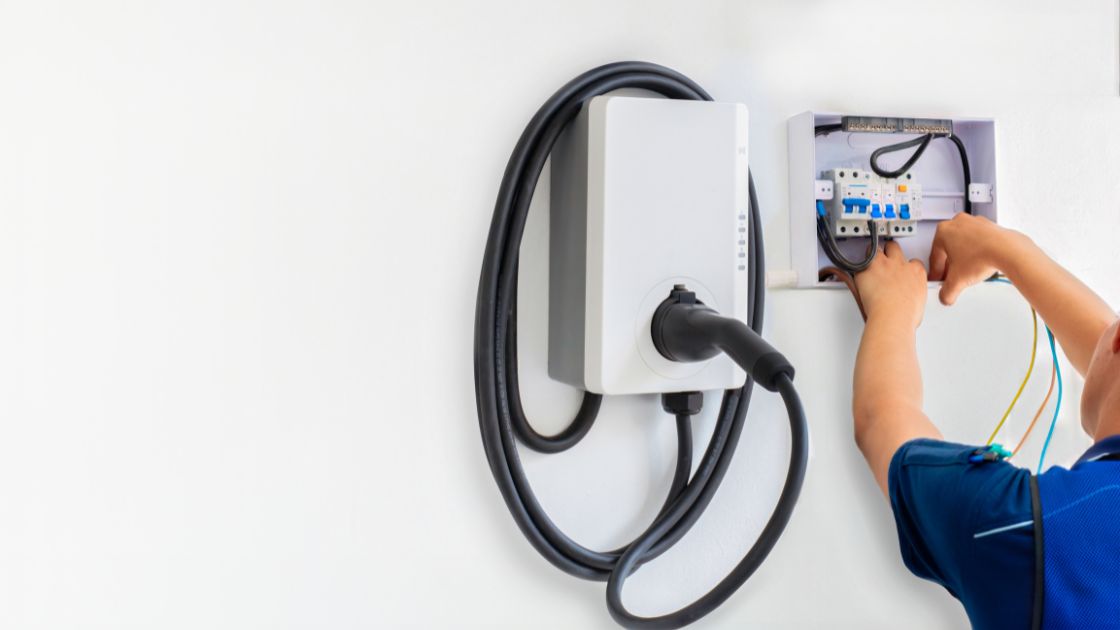
The catch is that a Level 2 charger requires a licensed electrician to install. This is not a weekend project. It involves pulling a new circuit from your panel, running the appropriate wiring, and mounting and connecting the charger unit itself.
The Real Question: What Is Your Panel Situation?
This is where older Conshohocken homes run into a very common obstacle.
Many pre-1950s rowhouses and twins are still running on 100-amp electrical service. That was a reasonable setup for decades, but a modern home is running a lot more load: central HVAC, a modern refrigerator, a washer and dryer, a dishwasher, and now all the devices and electronics that come standard in any household.
A Level 2 EV charger requires a dedicated 40 to 50-amp circuit. On a 100-amp panel that is already serving a full home’s worth of appliances, there is often simply no room for it. Think of it like a power strip that is already fully loaded. You cannot just add another appliance without something giving way.
The solution is a panel upgrade, typically to 150 or 200 amps. This gives your home the electrical headroom to support the charger and everything else without strain.
If you are in an older Conshy home, this is not a cause for alarm. It is one of the most routine jobs an electrician handles, and it does not require tearing into your walls or treating your house like a renovation project. It is infrastructure work, not a crisis.
What Does It Actually Cost?
A panel upgrade typically runs between $1,300 and $2,000, depending on the scope of the work and your current setup. The EV charger circuit installation itself adds another $200 to $800, with the range depending on how far the run is from your panel, whether conduit work is needed, and which charger brand you choose.
PECO, the local utility, offers a $50 rebate per EV registered. It will not cover the full cost, but it is worth claiming. Federal EV infrastructure tax credits may also apply to your installation. Talk to a tax professional about current eligibility, since those programs do change.
The total is a one-time infrastructure cost, not a recurring one. Compare that to what you are currently spending at public chargers or at the pump, and the math shifts pretty quickly in favor of home charging.
Why Permits Matter for Your Home’s Resale Value
Conshohocken Borough requires an electrical permit for EV charger installations. This is standard practice and not something you need to navigate yourself.
A licensed electrician pulls the permit as part of the job. That means the work gets inspected, it gets done to code, and there is a record of it. That matters when you eventually sell the house. Buyers and home inspectors notice permitted work, and unpermitted electrical work can complicate a transaction. The permit process is part of what you are paying a professional for.
Before You Buy, Know What You Have
Before you finalize an EV purchase, have a licensed electrician assess your panel. The assessment usually takes less than an hour and gives you a clear picture of what your home can handle — and what it would cost to upgrade if needed. Buying the car first and discovering later that your house was not quite ready for the charger you actually need is a frustrating and avoidable situation.
Call Golden Electrical Service to schedule a panel assessment or EV charger installation anywhere in the Conshohocken area. Whether your home needs a full panel upgrade or just a new circuit, knowing your starting point puts you in control.

Golden Electrical Service
506 Brookwood Dr, Ambler, PA 19002
(267) 577-0550 | goldenelectricians.com