
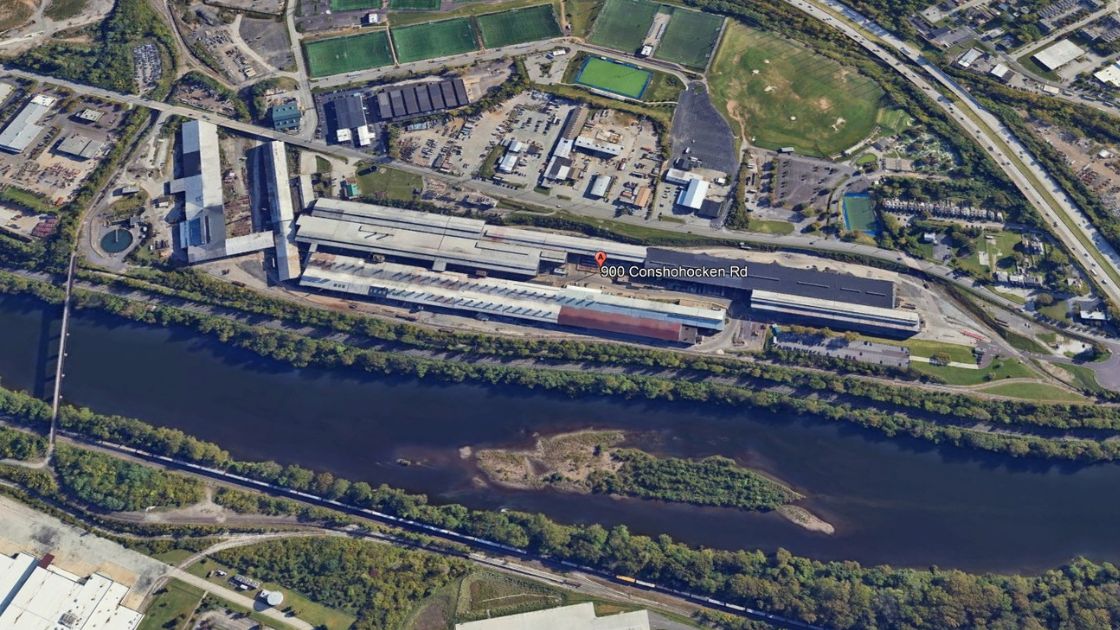
On the agenda for the Plymouth Township Zoning Hearing Board on November 16th is a substantive validity challenge to the township’s zoning code involving the proposed data center at 900 Conshohocken Road in Conshohocken (Plymouth Township). The challenge was brought by 900 Conshohocken Road, LLC, an entity associated with Brian O’Neill.
This is a separate process from the ongoing zoning hearings involving a proposed data center that seeks a special exception at the same property. Both processes involve the same proposed data center; however, they are different, and one does not impact the other. For example, if you received party status in relation to the case involving the special exception, you are not automatically given party status for the validity challenge. You have to attend and request it again.
The substantive challenge to the validity of the township’s zoning ordinance claims that the ordinance is De Jure Exclusionary (meaning the zoning ordinance explicitly prohibits or completely fails to make provisions for a specific type of legal land use), that the ordinance is De Facto Exclusionary (meaning the ordinance technically allows a specific use, but the rules make it impossible to develop or economically unviable), and that the ordinance fails to accommodate a legitimate land use.
The ramifications of a successful challenge are significant. If O’Neill wins, he will be permitted to move forward with the data center. On the PA Municipal League website, Brigitte Meyer and Donna Kohut of Penn Future published an article titled “Data Centers and Gas-Fired Power Plants: A Dangerous Combination,” which focuses on why municipalities must plan for data center development. The pair write:
A landowner or developer may bring a legal challenge against an exclusionary ordinance (called a substantive validity challenge), and if that challenge is successful, the ordinance will be declared invalid and struck down. More importantly, the successful challenger is generally entitled to build the “excluded” use at their chosen location, regardless of how that property is zoned. This means that, if a data center developer that owns property in a residential zoning district and wins a substantive validity challenge, it must be permitted to develop its property for a data center, even if it is not compatible with the surrounding residential uses. While this does not equate to carte blanche for a developer to build whatever it wants, it does mean that the municipality no longer controls where the use can be located.
Plymouth Township is one of the few townships in the area that has not adopted, or at least started the process of adopting, an ordinance focused on data centers. Pennsylvania law prohibits municipalities from banning them. Montgomery and Chester County issued a joint document in April that offered guidance to municipalities on crafting a data center ordinance. In July, Plymouth Township’s council issued a statement claiming its existing zoning, through the special exception process, offers a “lawful process for reviewing data centers.”
As mentioned, the validity challenge hearing is scheduled for November 16th. The continued hearing involving the special exception process is scheduled for November 19th (agenda). Both meetings will be held at the township building.
Photo – Google